


How did Black Death End?
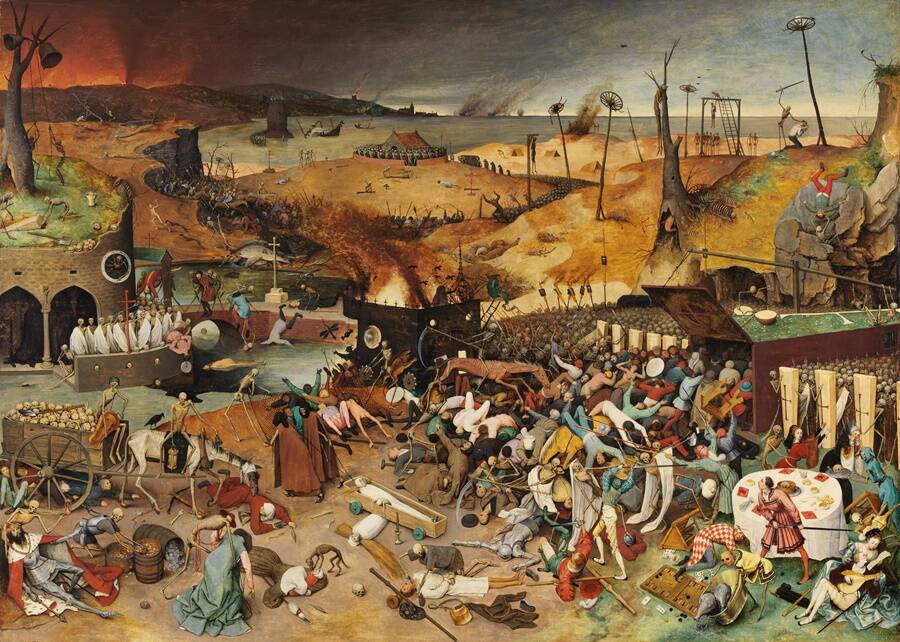
How was the end of the Black Death
How did it end The most popular theory of how the plague ended is through the implementation of quarantines. The uninfected would typically remain in their homes and only leave when it was necessary, while those who could afford to do so would leave the more densely populated areas and live in greater isolation.
When did the Black Death end and how
The Black Death epidemic had run its course by the early 1350s, but the plague reappeared every few generations for centuries. Modern sanitation and public-health practices have greatly mitigated the impact of the disease but have not eliminated it.
Cached
Was the Black Death ever cured
The bubonic plague can be treated and cured with antibiotics. If you are diagnosed with bubonic plague, you'll be hospitalized and given antibiotics. In some cases, you may be put into an isolation unit.
What ended the Black Death in England
In 1666 the Great Fire of London destroyed much of the centre of London, but also helped to kill off some of the black rats and fleas that carried the plague bacillus.
Cached
Did anyone survive the plague
After the ravages of the disease, surviving Europeans lived longer, a new study finds. An analysis of bones in London cemeteries from before and after the plague reveals that people had a lower risk of dying at any age after the first plague outbreak compared with before.
How long did it take for the Black Death to end
Plague pandemics hit the world in three waves from the 1300s to the 1900s and killed millions of people. The first wave, called the Black Death in Europe, was from 1347 to 1351.
How long did it take for the Black Plague to stop
Plague pandemics hit the world in three waves from the 1300s to the 1900s and killed millions of people. The first wave, called the Black Death in Europe, was from 1347 to 1351.
Could the Black Death happen again
No. Bubonic plague killed at least one-third of the population of Europe between 1346 and 1353. But that was before we knew it was caused by the bacterium Yersina pestis. Bubonic plague does still occasionally occur in small flare-ups of a few dozen cases, but we have antibiotics to treat it now.
Could the Black Death come back today
No. Bubonic plague killed at least one-third of the population of Europe between 1346 and 1353. But that was before we knew it was caused by the bacterium Yersina pestis. Bubonic plague does still occasionally occur in small flare-ups of a few dozen cases, but we have antibiotics to treat it now.
What was the worst virus in history
The disease – now confirmed to be bubonic plague – reached Constantinople, capital of the Late Roman or Byzantine Empire, in 541 AD. It was soon killing 10,000 people a day. Corpses littered public spaces and were stacked like produce indoors.
Who stopped the plague
Wrath has come out from the LORD; the plague has started." So Aaron did as Moses said, and ran into the midst of the assembly. The plague had already started among the people, but Aaron offered the incense and made atonement for them. He stood between the living and the dead, and the plague stopped.
Was dying of the plague painful
Within just hours an individual could be in agony from a number of these symptoms, if not all of them. The Black Plague, in all forms, is a relatively fast death, but an astonishingly painful one.
How long did a person live after getting the Black Plague
This was followed by acute fever and vomiting of blood. Most people died two to seven days after initial infection. Freckle-like spots and rashes, which could have been caused by flea-bites, were identified as another potential sign of plague.
Can the Black Death start again
No. Bubonic plague killed at least one-third of the population of Europe between 1346 and 1353. But that was before we knew it was caused by the bacterium Yersina pestis. Bubonic plague does still occasionally occur in small flare-ups of a few dozen cases, but we have antibiotics to treat it now.
What is the most deadliest disease in history
1. The Black Death: Bubonic Plague. The Black Death ravaged most of Europe and the Mediterranean from 1346 until 1353. Over 50 million people died, more than 60% of Europe's entire population at the time.
Would we survive the Black Death now
Unlike COVID-19, we have clear treatments for the bubonic plague. Additionally, the disease is rare with a few cases every year found in the United States. This means there's pretty much no chance we'd ever see a pandemic play out like the one in the 14th century.
Are we immune to the Black Plague
Many Europeans carry genetic mutations that protected their ancestors from the bubonic plague, scientists reported on Wednesday in the journal Nature.
How long did the Black Death last in the world
Plague pandemics hit the world in three waves from the 1300s to the 1900s and killed millions of people. The first wave, called the Black Death in Europe, was from 1347 to 1351. The second wave in the 1500s saw the emergence of a new virulent strain of the disease.
What is the plague called today
What is the plague called today Today we still use the word “plague” to mean illness caused by Yersinia pestis. Usually, we also call it by the specific type of plague it is — bubonic, septicemic or pneumonic.
Was COVID worse than the plague
By sheer number of casualties, Covid-19 ranks among the 10 deadliest plagues in history.
What pandemic was before COVID
Today, the COVID-19 pandemic is frequently compared with the influenza pandemic of 1918-1919. The destruction caused by that pandemic a century ago may sound familiar. Yet, direct comparisons of the 1918 flu pandemic and the COVID-19 pandemic may not be completely fair, according to one scientist.
Who was immune to the Black Plague
In the study, Barreiro and his colleagues found that Black Death survivors in London and Denmark had an edge in their genes – mutations that helped protect against the plague pathogen, Yersinia pestis. Survivors passed those mutations onto their descendants, and many Europeans still carry those mutations today.
Did the plague stink
To purify the air around them, they would burn rosemary and hot tar. These scents, wafting through winding streets of London, were so common during the Great Plague of the 17th century that they became synonymous with the plague itself, historians said.
What plague was the scariest
1. The Black Death. A plague so devastating that simply saying “The Plague” will immediately pull it to the front of your mind, in the middle of the 14th century—from 1347 to 1351—the Black Death remade the landscape of Europe and the world.
Who was immune to the Black plague
In the study, Barreiro and his colleagues found that Black Death survivors in London and Denmark had an edge in their genes – mutations that helped protect against the plague pathogen, Yersinia pestis. Survivors passed those mutations onto their descendants, and many Europeans still carry those mutations today.