


What ended the Black Death?
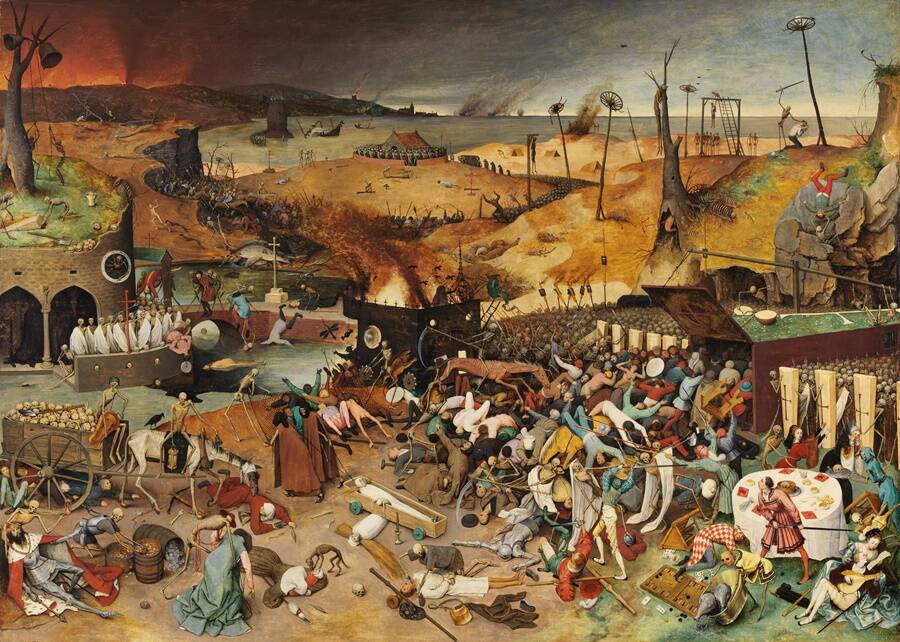
When and how did the Black Death end
The Black Death epidemic had run its course by the early 1350s, but the plague reappeared every few generations for centuries. Modern sanitation and public-health practices have greatly mitigated the impact of the disease but have not eliminated it.
Cached
Was the Black Death ever cured
The bubonic plague can be treated and cured with antibiotics. If you are diagnosed with bubonic plague, you'll be hospitalized and given antibiotics. In some cases, you may be put into an isolation unit.
What stopped the Black Death pandemic
While people still become infected with bubonic plague, better hygiene and less contact with rat fleas that can transmit the infection to humans have prevented further deadly plague pandemics.
Cached
What ended the Black Death in England
In 1666 the Great Fire of London destroyed much of the centre of London, but also helped to kill off some of the black rats and fleas that carried the plague bacillus.
Cached
How was the plague cured
Antibiotics and supportive therapy are effective against plague if patients are diagnosed in time. Pneumonic plague can be fatal within 18 to 24 hours of disease onset if left untreated, but common antibiotics for enterobacteria (gram negative rods) can effectively cure the disease if they are delivered early.
How long did it take for the Black Plague to stop
Plague pandemics hit the world in three waves from the 1300s to the 1900s and killed millions of people. The first wave, called the Black Death in Europe, was from 1347 to 1351.
Could the Black Death come back today
No. Bubonic plague killed at least one-third of the population of Europe between 1346 and 1353. But that was before we knew it was caused by the bacterium Yersina pestis. Bubonic plague does still occasionally occur in small flare-ups of a few dozen cases, but we have antibiotics to treat it now.
Could the Black Death happen again
No. Bubonic plague killed at least one-third of the population of Europe between 1346 and 1353. But that was before we knew it was caused by the bacterium Yersina pestis. Bubonic plague does still occasionally occur in small flare-ups of a few dozen cases, but we have antibiotics to treat it now.
What were the cures for the plague in 1665
Cures. The cures in 1665-1666 were similar to those used in the 1348-1349 Black Death outbreak. Bloodletting and purging were widely used, showing that the four humours were still believed to cause disease. Plague doctors wore outfits to protect them from coming into contact with victims.
When did the Black Death end
1353Black Death / End date
What is the deadliest disease in history
1. The Black Death: Bubonic Plague. The Black Death ravaged most of Europe and the Mediterranean from 1346 until 1353. Over 50 million people died, more than 60% of Europe's entire population at the time.
What is the most deadliest disease in history
1. The Black Death: Bubonic Plague. The Black Death ravaged most of Europe and the Mediterranean from 1346 until 1353. Over 50 million people died, more than 60% of Europe's entire population at the time.
What was the worst virus in history
The disease – now confirmed to be bubonic plague – reached Constantinople, capital of the Late Roman or Byzantine Empire, in 541 AD. It was soon killing 10,000 people a day. Corpses littered public spaces and were stacked like produce indoors.
Has the plague mutated
Comparing the bones from before and after the plague hit, the scientists found a striking difference in DNA: Hundreds of mutations in genes involved in immunity became more common after the epidemic. This shift was not proof on its own that the mutations conferred some evolutionary advantage.
When did the world recover from the Black Death
Historians estimate that it reduced the total world population from 475 million to between 350 and 375 million. In most parts of Europe, it took nearly 80 years for population sizes to recover, and in some areas, it took more than 150 years.
Are we immune to the Black Plague
Many Europeans carry genetic mutations that protected their ancestors from the bubonic plague, scientists reported on Wednesday in the journal Nature.
Would we survive the Black Death now
Unlike COVID-19, we have clear treatments for the bubonic plague. Additionally, the disease is rare with a few cases every year found in the United States. This means there's pretty much no chance we'd ever see a pandemic play out like the one in the 14th century.
Who found cure for Black Death
Guy de Chauliac, a medieval practitioner known later as the father of Western surgery, worked courageously caring for patients through the Black Death (Fig). Examining Guy's experience exposes how medical providers in the Middle Ages understood and treated this disease.
How did people try to stop the Great plague
People thought impure air caused the disease and could be cleansed by smoke and heat. Children were encouraged to smoke to ward off bad air. Sniffing a sponge soaked in vinegar was also an option. As the colder weather set in, the number of plague victims started to fall.
How did the Black Death end the Middle Ages
The Black Death left in its wake a period of defiance and turmoil between the upper classes and the peasantry. The dispute regarding wages led to the peasants' triumph over the manorial economic system and ultimately ended in the breakdown of feudalism in England.
What disease killed 50 billion people
Infectious diseases with high prevalence are listed separately (sometimes in addition to their epidemics), such as malaria which may have killed 50-60 billion people throughout history, or about half of all humans that have ever lived.
What killed the most humans in history
Table ranking "History's Most Deadly Events": Influenza pandemic (1918-19) 20-40 million deaths; black death/plague (1348-50), 20-25 million deaths, AIDS pandemic (through 2000) 21.8 million deaths, World War II (1937-45), 15.9 million deaths, and World War I (1914-18) 9.2 million deaths.
What disease has the lowest survival rate
Rabies. Rabies, one of the oldest known infectious diseases, is nearly 100% fatal and continues to cause tens of thousands of human deaths globally (1).
Was COVID worse than the plague
By sheer number of casualties, Covid-19 ranks among the 10 deadliest plagues in history.
What pandemic was before COVID
Today, the COVID-19 pandemic is frequently compared with the influenza pandemic of 1918-1919. The destruction caused by that pandemic a century ago may sound familiar. Yet, direct comparisons of the 1918 flu pandemic and the COVID-19 pandemic may not be completely fair, according to one scientist.